
.NET Background Jobs at Scale: Hangfire vs Quartz vs Azure Functions
In modern .NET systems, background job processing is no longer a “nice to have.” It is core infrastructure for billing cycles, notifications, data sync, report generation, cleanup pipelines, and event-driven workflows.
💡 Want implementation-ready .NET source code you can adapt fast? Join Coding Droplets on Patreon for practical project packs and architecture breakdowns: https://www.patreon.com/CodingDroplets
The hard part is not deciding whether you need background jobs. The hard part is choosing the right execution model before scale pressure exposes weak assumptions. In most teams, the decision eventually narrows to three options: Hangfire, Quartz.NET, and Azure Functions. Each can succeed in production, but each fits a different operational reality.
Why This Comparison Matters For .NET Background Jobs
Most production incidents around scheduled workloads are not caused by “bad code.” They are usually caused by mismatched architecture:
Scheduler chosen for convenience, not reliability boundaries
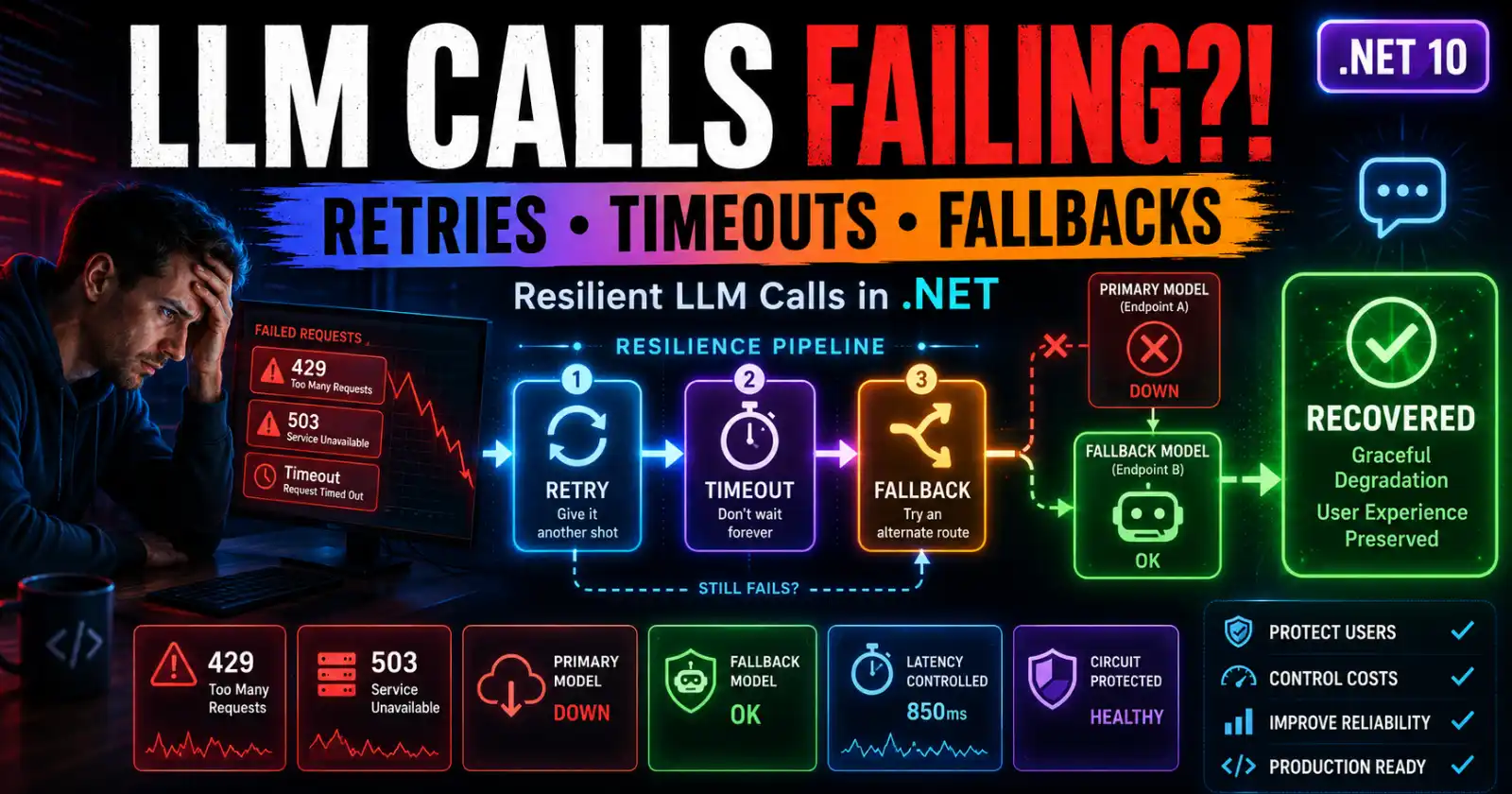
Retry behavior that amplifies downstream outages
No clear ownership of failure queues and dead letters
Horizontal scale without distributed coordination discipline
When teams compare Hangfire vs Quartz vs Azure Functions early, they avoid expensive rewrites when job volume and tenant count rise.
Decision Lens: Architecture Before Framework Preference
Use these architecture questions first:
Hosting boundary: Must jobs run inside your app process, or outside as managed compute?
Scheduling complexity: Mostly recurring intervals, or calendar-grade enterprise schedules?
Operational model: Self-hosted control with full tuning, or managed platform with cloud-native elasticity?
Failure model: Do you need custom retry pipelines and backpressure controls?
Multi-tenant isolation: How strict must noisy-neighbor prevention be?
This decision lens keeps the conversation focused on background processing architecture, not tool fandom.
Hangfire: Fastest Path To Practical Operational Background Jobs
Hangfire is often the fastest route when you need durable jobs in ASP.NET Core with low ceremony.
Where Hangfire Wins
Strong ergonomics for enqueueing fire-and-forget and recurring jobs
Built-in dashboard gives immediate job lifecycle visibility
Good fit for CRUD-centric SaaS workloads that need predictable retries
Natural adoption for teams already running .NET app servers and SQL/Redis
Where Hangfire Needs Caution
Complex enterprise calendars and advanced scheduling policies can become awkward
Governance can drift if teams create many ad-hoc queues without ownership rules
At larger scale, queue partitioning, worker tuning, and storage performance need explicit platform discipline
Hangfire is ideal when teams value delivery speed and operational transparency over highly specialized scheduling semantics.
Quartz.NET: Precision Scheduling And Enterprise Control
Quartz.NET is strong when scheduled jobs in ASP.NET Core must follow strict trigger rules and calendar logic.
Where Quartz Wins
Rich trigger model (cron, calendars, misfire handling strategies)
Strong fit for regulated enterprise workloads requiring scheduling precision
Mature clustering capabilities for distributed job processing
Better long-term fit when scheduling policy itself is a first-class business requirement
Where Quartz Needs Caution
More operational complexity than Hangfire in day-to-day setup and governance
Monitoring and visibility require additional instrumentation decisions
Teams without scheduler expertise can underutilize its strengths
Quartz shines when schedule correctness is mission-critical and teams can invest in governance maturity.
Azure Functions: Event-Driven Scale With Managed Operations
Azure Functions changes the equation by externalizing execution into managed cloud infrastructure.
Where Azure Functions Wins
Deep alignment with event-driven architectures and cloud-native integrations
Elastic scale model for bursty or unpredictable workloads
Tight integration with Azure observability and platform controls
Clean separation between web app lifecycle and background execution lifecycle
Where Azure Functions Needs Caution
Strong Azure dependency can raise portability concerns
Cost governance and cold-start behavior need design attention
Requires disciplined trigger, retry, and idempotency design to avoid duplicate side effects
Azure Functions is the strongest option when your distributed job processing strategy is already cloud-event-centric.
Job Retry Strategy: The Real Reliability Differentiator
Framework choice helps, but retry design determines production outcomes.
Use these baseline patterns regardless of platform:
Bounded retries with exponential backoff for transient failures
Idempotent handlers so retries do not create duplicate business side effects
Poison/dead-letter handling with operational ownership
Circuit-breaker integration when downstream dependencies degrade
Failure budget alerts tied to SLOs, not raw exception counts
In practice, teams that formalize retry governance early outperform teams that only optimize scheduler features.
Recommended Decision Matrix
Choose Hangfire When
You need durable .NET background jobs quickly
Your team wants built-in operational visibility out of the box
Scheduling complexity is moderate and mostly business-interval based
Choose Quartz.NET When
Complex scheduling semantics and calendar rules are non-negotiable
You need fine-grained trigger behavior and enterprise-grade schedule governance
Your operations team can support deeper scheduler configuration
Choose Azure Functions When
You already operate primarily in Azure
Workloads are event-driven, bursty, or integration-heavy
You prefer managed execution over self-hosted scheduler operations
Final Architecture Guidance
For most teams, the best answer is not purely technical; it is organizational. Choose the model your team can operate reliably at 2 a.m. during an incident.
If your priority is shipping quickly with clear job visibility, start with Hangfire. If schedule precision is a contractual requirement, prefer Quartz.NET. If cloud-native scale and event automation are core to your platform strategy, Azure Functions is usually the better long-term bet.
The right choice is the one that matches your background processing architecture, failure ownership model, and operating discipline at scale.
Frequently Asked Questions (FAQ)
1) Is Hangfire or Quartz better for scheduled jobs in ASP.NET Core?
For most teams with standard recurring workloads, Hangfire is faster to adopt. Quartz is usually better when you need advanced cron, calendar rules, and strict scheduling semantics.
2) Can Azure Functions replace Hangfire for all .NET background jobs?
Not always. Azure Functions is excellent for event-driven and cloud-managed workloads, but teams with strict self-hosting requirements or non-Azure constraints may prefer Hangfire or Quartz.
3) What is the safest job retry strategy for distributed job processing?
Use bounded retries, exponential backoff, idempotency, and dead-letter handling. Retry without idempotency is a common source of duplicate business actions.
4) Which option is most cost-effective at scale?
It depends on traffic shape and operations model. Self-hosted schedulers can be cost-efficient for steady workloads, while Azure Functions can be efficient for bursty workloads with careful plan selection.
5) How should teams start if they are unsure?
Start with a decision matrix based on hosting boundaries, schedule complexity, and incident ownership. Pilot one high-value workflow first, then standardize governance before wider rollout.